← Consulting overview

Existing farm consulting · Surrey, BC

Practical help to improve your existing farm.

Work through recurring crop problems, make daily work more consistent, and put your next improvement into practice.

Discuss your farm’s priority
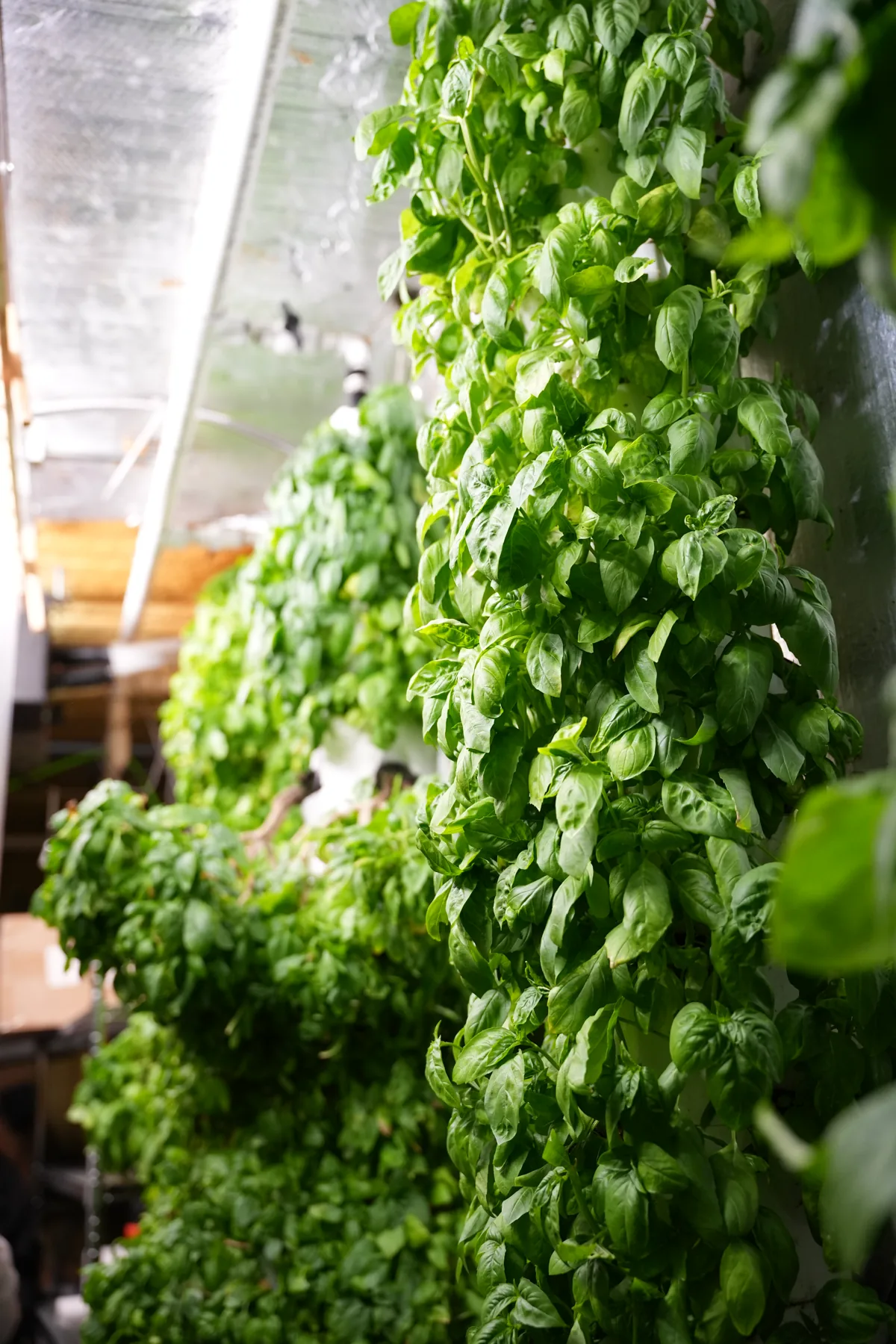
Basil growing on planted vertical columns inside Sustainabite’s operating Surrey farm.
Basil growing in our operating farm in Surrey.

For owners, farm managers and grow teams running a greenhouse, hydroponic or aeroponic setup, vertical farm or another growing operation. We start with the crops, equipment and people already in place, not an assumption that you need a new system.

When the same issue keeps coming back, it helps to look beyond the latest adjustment. We connect growing conditions, work routines and production costs, then help you decide what to change and carry out the agreed work.

In-person across Greater Vancouver through Chilliwack · Remote consulting across Canada and worldwide · Contact for a quote

Built around real operating work

Growing is only part
of running a farm.

We built and operate our own farm in Surrey, growing basil and supplying produce to retail customers. Our work connects crop care with harvest, weighing, packaging and delivery. A change in the growing area has to work for the people doing the next task and the customer receiving the product.

That is the operating perspective we bring to consulting. We look at how a proposed change fits your production cycle, your team’s routine and the output you can actually sell.

Explore our Surrey farm

Practical operation + technical and economic thinking

A team perspective on the whole operation.

Our team brings master’s qualifications in Agricultural Engineering and Environmental Engineering, and a PhD in Agricultural Economics. Together, those perspectives connect equipment and workflow choices with growing conditions, resource use, costs and market decisions.

Consulting is available across crops and growing systems. The work is shaped around your crop, farm scale and the specific help you need.

Start with the problem or decision

What needs to work better
on your farm?

You may need help with one recurring task, a change in production or an investment you are preparing to make. We focus the work on that priority while checking the connections that could otherwise be missed.

Labour and daily routines

Make good practice easier to repeat.

If the owner has to explain every task, staff handovers are inconsistent or harvest days keep backing up, another piece of equipment may not be the first answer. We can examine the sequence of work with the people doing it, review the layout and instructions, and identify unnecessary movement, repeated handling and unclear responsibilities.

The work can include revised standard operating procedures (SOPs), task checklists, monitoring routines and practical staff training. Your team gets instructions they can use during seeding, transplanting, crop care, cleaning or harvest, with a clearer handover between tasks.

Useful next step: put an agreed routine into use and track where work is still delayed or repeated.
Crop performance and troubleshooting

Look at the crop and its conditions together.

Uneven growth, poor establishment or a recurring crop problem can leave you changing several things without knowing which helped. We can review crop selection and production timing, propagation practices, water and nutrient management, irrigation, and the growing environment alongside your observations and records.

That may mean organizing checks of irrigation timing and distribution, pH and nutrient readings, light, temperature, humidity or airflow. We help identify what needs closer investigation, which records would be useful and how to structure an agreed trial. Where diagnosis needs laboratory testing or specialist input, that becomes part of the next step rather than a guess from a photograph.

Useful next step: a prioritized set of checks or crop-care changes, with a clear way to observe the next production cycle.

Energy, water and other inputs

Understand resource use before changing equipment.

A larger utility bill does not explain what is happening inside the growing area. We can bring energy and water records together with production, schedules and operating conditions to look for avoidable use and compare practical options.

Lighting, heating, ventilation, irrigation and crop timing need to be considered together. The work can include a resource-use baseline, operating priorities, monitoring requirements or a comparison of proposed changes. Equipment or control changes can then be planned around crop needs, maintenance and the people responsible for operating them.

Useful next step: decide what to adjust, what to measure and whether an upgrade merits a trial before a larger commitment.

Harvest, quality and customers

Connect what you grow
with what you can sell.

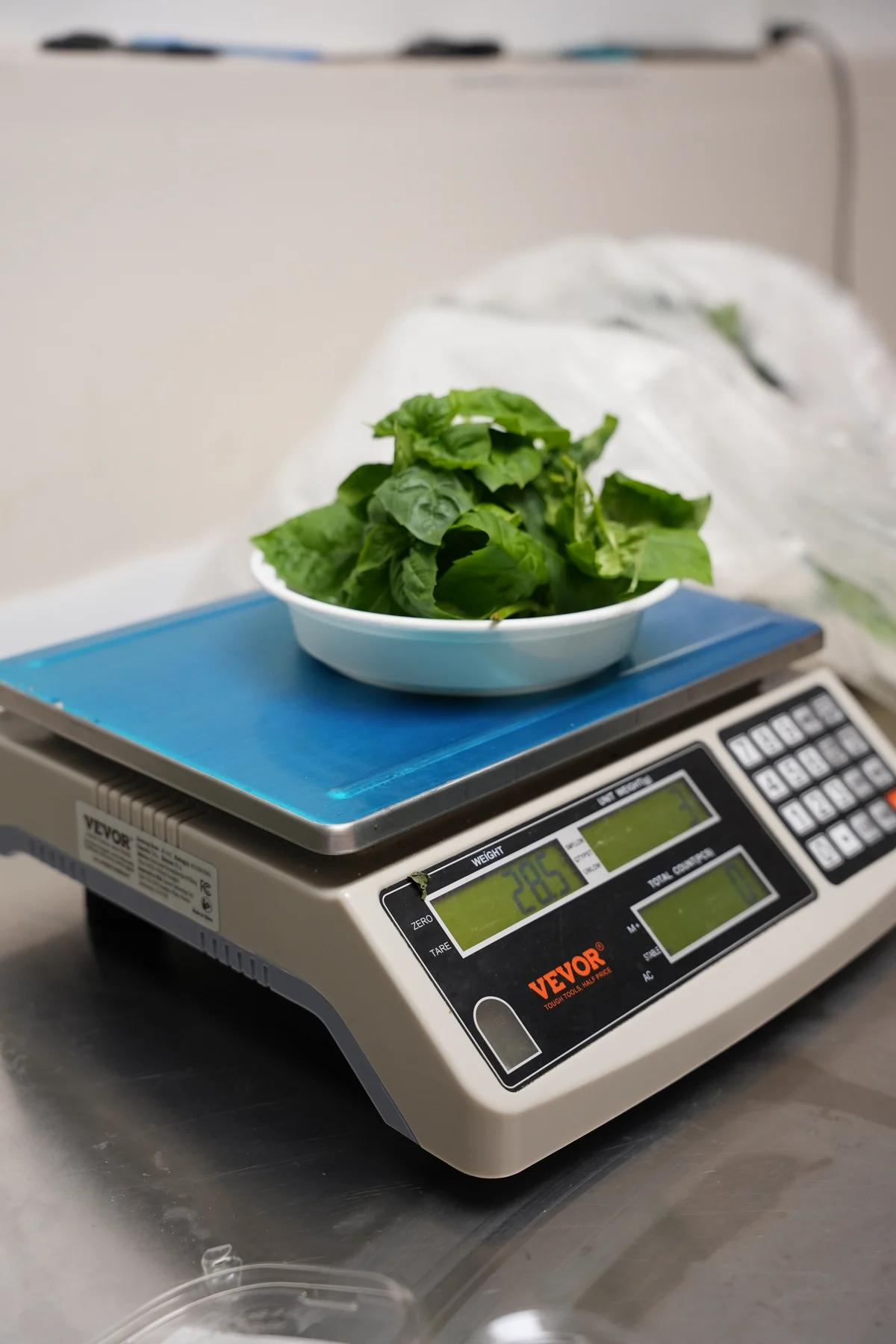
Harvested basil in a bowl on a digital scale at Sustainabite’s Surrey farm.
Weighing basil at our Surrey farm before packing for retail.

A bigger harvest is not automatically a better business result. We can review saleable output, rejects, handling losses, labour, packaging and customer requirements to understand where production and the route to market are out of step.

Help can include harvest and packing routines, shelf-life considerations, food quality and safety readiness, and preparation for retail or wholesale supply. Crop and channel costing can inform product pricing, production quantities and harvest schedules. If you are changing crops or buyers, a smaller production trial can test quality, handling and costs before scaling up.

Useful next step: use a crop or channel comparison, revised handling instructions or a production plan that reflects the customer’s requirements.

Upgrades and expansion

Make the next investment fit the farm.

Before adding lighting, irrigation, automation or more growing capacity, define what the change needs to achieve. We can review designs and supplier proposals, compare system and equipment requirements, and consider layout, labour, utilities, operating costs and market assumptions together. A phased change, a trial or better use of the existing setup may be more appropriate than immediate expansion.

Once a direction is agreed, the work can extend to equipment sourcing and procurement, installation and commissioning support, hands-on startup and operator training. Already purchased the equipment? We can help organize readiness checks, startup tasks and the routines your team will need to use it.

Useful next step: make a purchasing decision with clearer requirements, or move an agreed upgrade into operation with responsibilities and handover understood.

From a recurring issue to practical action

Advice should help your team
do the next task.

A review can answer a focused question. When you need help carrying out the change, we can include the practical work, training and follow-through in the agreed scope.

Illustrative workflow example

Harvest keeps running late before delivery.

Rather than assume the farm needs more staff or faster equipment, a focused engagement could follow the work from the production plan to the packed order.

  1. 01 · Observe

    Locate the bottleneck.

    Walk through the sequence with the operator. Review harvest timing, task handovers, work areas and current instructions.

  2. 02 · Prioritize

    Agree what to change.

    Separate a scheduling issue from handling, layout or equipment needs. Choose the change and what would show whether it helped.

  3. 03 · Put into use

    Practise the new routine.

    Revise the agreed SOPs, prepare the work sequence and train the team. Include sourcing or startup support if equipment is part of the scope.

  4. 04 · Check

    Review the next cycle.

    The operator records agreed observations, such as repeated work or packing delays. A quoted follow-through can review the results and next adjustment.

This illustrates how a scope can work, not a reported client result or a fixed package.

Work you can use

The right output for
the decision in front of you.

We agree what will be delivered and how you will use it. You do not have to commission every stage to get help with a focused need.

An answer and clear priorities

A call, written assessment or design review can help you understand an operating issue or compare a proposal. Findings should identify useful next checks, decisions or actions, not leave you with a generic list of recommendations.

A plan your team can follow

An implementation plan, production schedule, equipment comparison or working instructions can turn a decision into an ordered sequence. The scope identifies the people, inputs and specialist or supplier tasks needed to carry it out.

Practical help with the change

Sourcing, installation and commissioning support, hands-on startup and training can help move an agreed improvement from paper into daily use. We settle equipment purchases, site readiness and operator participation in the quote.

Agreed continuing support

Where useful, we can review progress, work through operating questions or support the next change over an agreed period. We agree who handles the day-to-day tasks, what support continues and when.

We can agree useful measures such as saleable output, rejects, labour per saleable unit or measured resource use. These give the review a practical basis without assuming the same target or result for every farm.

Working together

Start with your priority.
Agree the work and quote.

Tell us what keeps recurring or what you want to change. We review the project details, discuss the help needed and agree a scope before the work begins.

The quote sets out the activities or outputs, delivery format, responsibilities and any equipment, travel or specialist work. A focused question, a defined improvement project and continuing support involve different levels of work.

Contact for a quote

On site or remote, matched to the task.

We are based in Surrey, BC, with in-person support across Greater Vancouver through Chilliwack. We work with farms across Canada and offer remote consulting worldwide. Visits elsewhere can be arranged, with travel and accommodation included in the project quote.

Remote work can use discussions, plans, records, photographs, video and observations from the person on site. Observing a workflow, practical startup or hands-on training may call for a visit. We agree the delivery approach around what the work actually requires.

We work with the owner or farm manager and the people carrying out the relevant tasks, alongside existing vendor or specialist support where needed.

Before you enquire

A few practical questions.

Can you help with our existing equipment?

Yes. We start with your current setup, what you want to improve and any support already available from suppliers or advisers. A new container, growing system or equipment purchase is not a requirement.

Is this only for basil or indoor farms?

No. We consider projects across crops and growing systems, including greenhouses, hydroponic and aeroponic systems, vertical farms and other growing operations. Share your crop and setup so we can establish the relevant scope.

Do we need complete records before contacting you?

No. Start with your location, crop or system if known, the issue and the decision ahead. Production records, crop observations, work instructions, utility data or supplier proposals may become useful later. We agree which details are needed after establishing fit; detailed financial records or laboratory results are not needed for the initial enquiry.

Can you train our team or help after an upgrade?

Yes. Practical training, startup and commissioning support can be scoped around the equipment and tasks involved. We can also agree continuing support to review progress or address later operating questions, rather than stopping at a written plan.

How much does the work cost?

Contact for a quote. The issue, work required, delivery format and location shape the scope. A focused review can stand on its own; implementation, training or continuing support are included when agreed in the quote.

Tell us what needs to change

What needs to change on your farm?

Share your crop or growing setup, location, and the problem or improvement you want help with.

Discuss Your Farm Explore other consulting help

Paid consulting. Scope and fees agreed by quote.